
What We Usually Find on These Calls
A typical call starts the same way: the homeowner says the door is 'sticking' or 'grinding' partway through its cycle, and sometimes it reverses on its own before it even gets close to the floor. When we pull the car out of the way and look at the tracks, we'll often see daylight between the rollers and the rail on one side, a kink where the vertical track meets the curved section, or a mounting bracket that's pulled loose from the framing. In older Sacramento neighborhoods with wood-framed garages, we also see tracks that have drifted out of plumb because the framing itself has shifted slightly over the years.
Symptoms That Point to a Track Problem
- Visible gap or overlap between the rollers and the track on one side of the door.
- Grinding or scraping noise as the door travels, especially at the same spot every time.
- Door binds or hesitates partway up or down instead of moving smoothly.
- Door reverses unexpectedly because the opener's sensors read the extra resistance as an obstruction.
- Crooked appearance when the door is open — one side sits noticeably higher or lower than the other.
- Rollers popping out of the track, usually near the bent section.
None of these symptoms fix themselves, and forcing the opener to keep cycling against a bent track usually turns a simple adjustment into a track replacement.
How We Track Down the Cause
1. Mounting Hardware First
The first thing a technician checks is whether the brackets holding the track to the frame have loosened or shifted. Vibration from regular daily use, plus the wood expansion and contraction that comes with Sacramento's dry summers and wet winters, can work lag screws loose over time. A loose bracket lets the track flex every time the door passes, which eventually bends the rail itself.
Fix: Re-securing or replacing the mounting hardware and shimming the bracket back to the correct position. If the wood framing behind the bracket has softened or split, we'll add a backer board before remounting.
2. Impact Damage
Next, we look for a direct hit — a car bumper, a bike, a ladder, or a stray basketball catching the track low on one side. This is the most common cause we see, and it almost always shows up as a sharp kink rather than a gradual bow.
Fix: Minor bends in the lower vertical section can sometimes be carefully bent back into alignment with the right tools. Anything with a sharp crease, rust at the bend, or damage near the curved section usually needs the section replaced rather than reshaped, since a track that's been forced back once is weaker and prone to bending again.
3. Worn or Damaged Rollers
Rollers that have flat spots, cracked plastic, or seized bearings put uneven pressure on the track every time the door moves. Over months, that uneven pressure can pull the rail slightly out of true, especially on heavier doors.
Fix: Replacing worn rollers with new nylon or steel rollers, matched to the door's weight. This is often done alongside a track adjustment, since a bent track and bad rollers tend to show up together.
4. House Settling or Frame Movement
In homes with older foundations or wood-framed garages that have gone through a seismic retrofit, the opening itself can shift slightly out of square over the years. This doesn't bend the track directly, but it pulls the track brackets out of alignment with each other, which has the same effect on the door.
Fix: Re-leveling the tracks to match the current framing, which sometimes means adjusting both sides rather than just the one showing symptoms. We check the opening with a level before touching the track itself, since fixing the rail without addressing the framing just means the problem comes back.
5. Dust, Debris, and Dry-Season Buildup
During Sacramento's dry months, dust and fine debris — sometimes worse during wildfire smoke season — settle into the track channel. This isn't a structural cause of bending, but it compounds binding symptoms and can mask or mimic a misalignment issue, so it's one of the last things we rule out before confirming the track itself is bent.
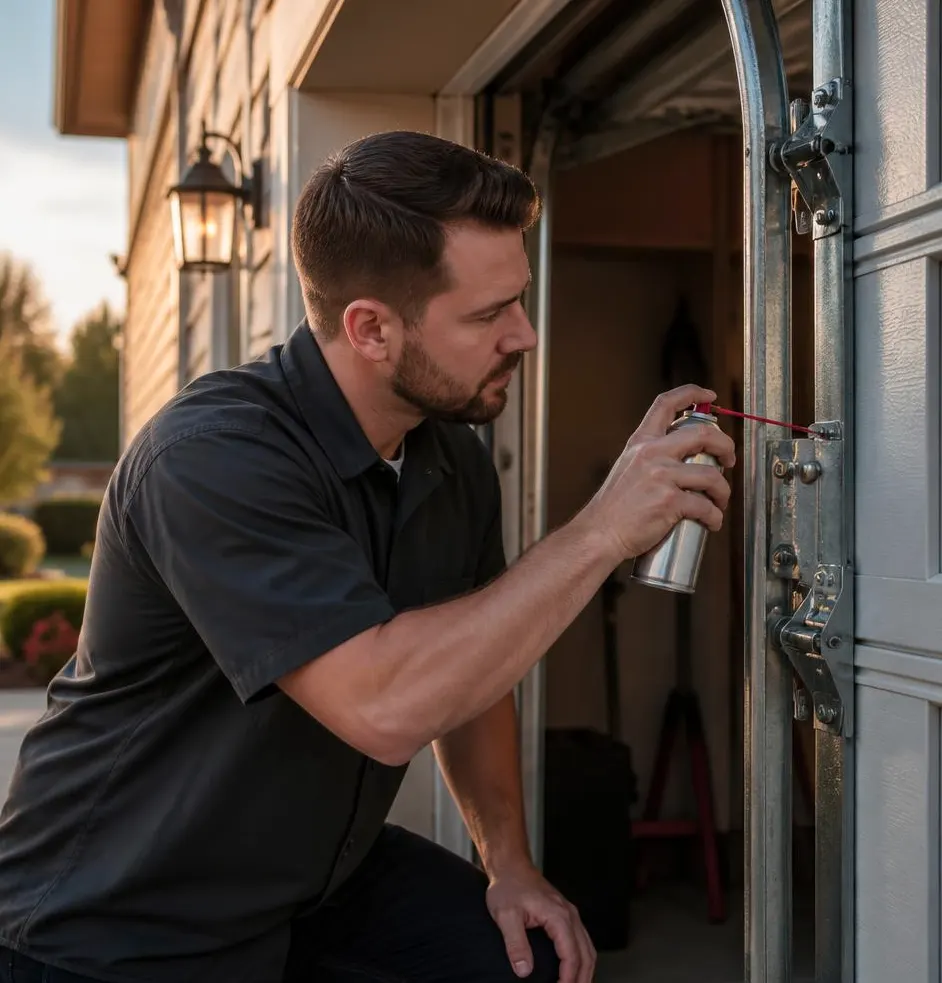
Fix: A full track cleaning and lubrication, usually paired with a general inspection so we're not chasing a dust problem while an actual misalignment goes untreated.
When to Call Sacramento Garage Door Service
If your door is grinding, hesitating, or reversing on its own, don't keep running the opener through it — that's how a bent track turns into a torn panel or a door off its rollers entirely. Our techs handle this as part of standard Garage Door Repair, checking brackets, rollers, and alignment in the same visit so we're fixing the actual cause, not just the symptom. If the issue turns out to be tied to worn hardware across the whole system, we'll usually recommend rolling it into our Garage Door Maintenance service so the rest of the door isn't on the same timeline to fail.
If your garage door is sticking, scraping, or sitting crooked when it's open, call Sacramento Garage Door Service today and we'll get it running straight again — serving Sacramento, Carmichael, Fair Oaks, Rancho Cordova, Citrus Heights, Roseville, Elk Grove, and West Sacramento.